Experimental mechanics / UIUC · AE 498 / 2026
Thin Origami Bellows
I designed and tested a paper bellows; the test showed why its attachments needed as much attention as its folds.
Overview
Pulling a folded structure open.
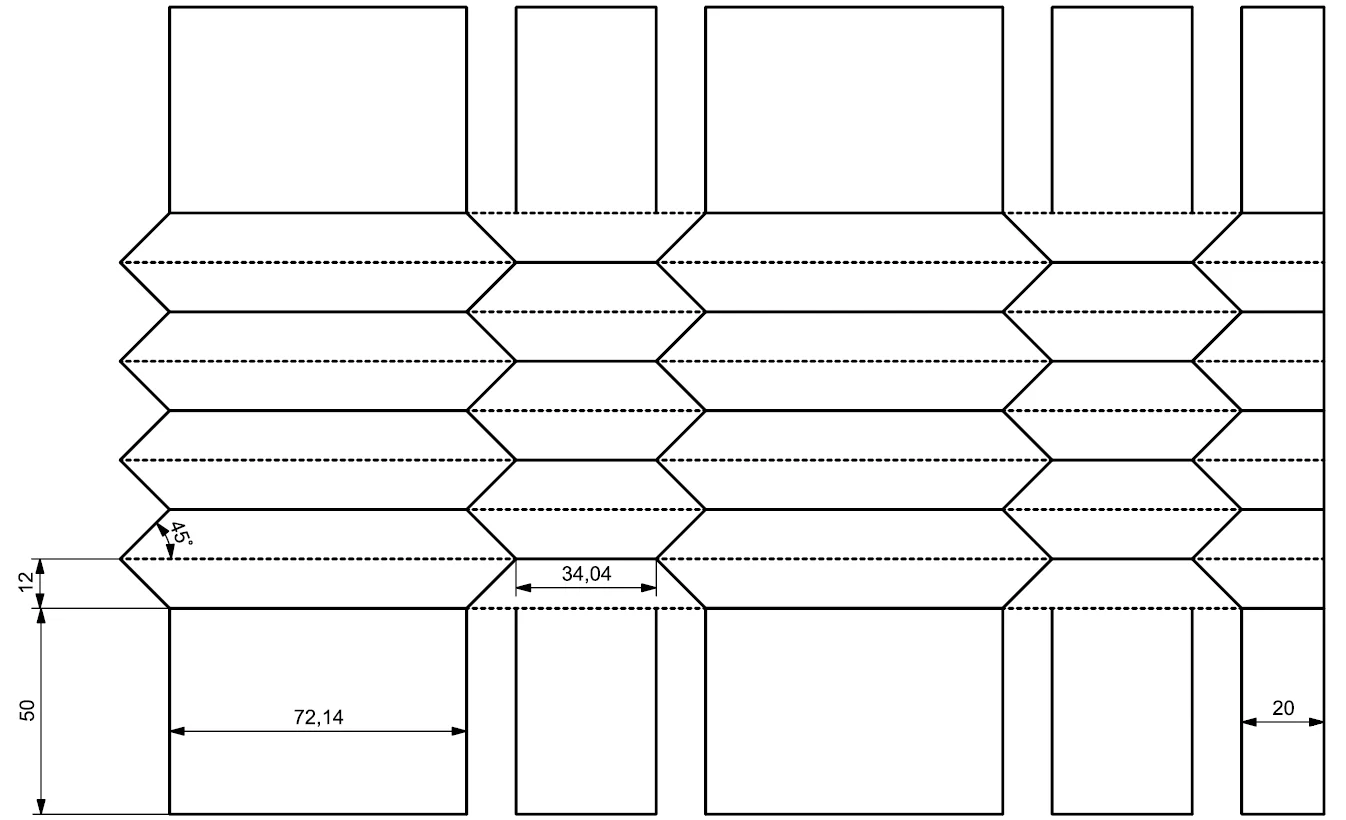
I designed a paper bellows to study how a folded structure opens under tension. I created the crease pattern in NX, made the specimen, and tested it using printed fixtures.
The single trial reached 48.1 N before tearing near an attachment. That result describes this specimen and test setup, rather than a repeatable strength rating.
The test made the load transfer into the paper a clear issue for further work. Better attachments and repeat tests would be needed to separate the bellows’ opening behavior from the limits of the setup.
Making the bellows
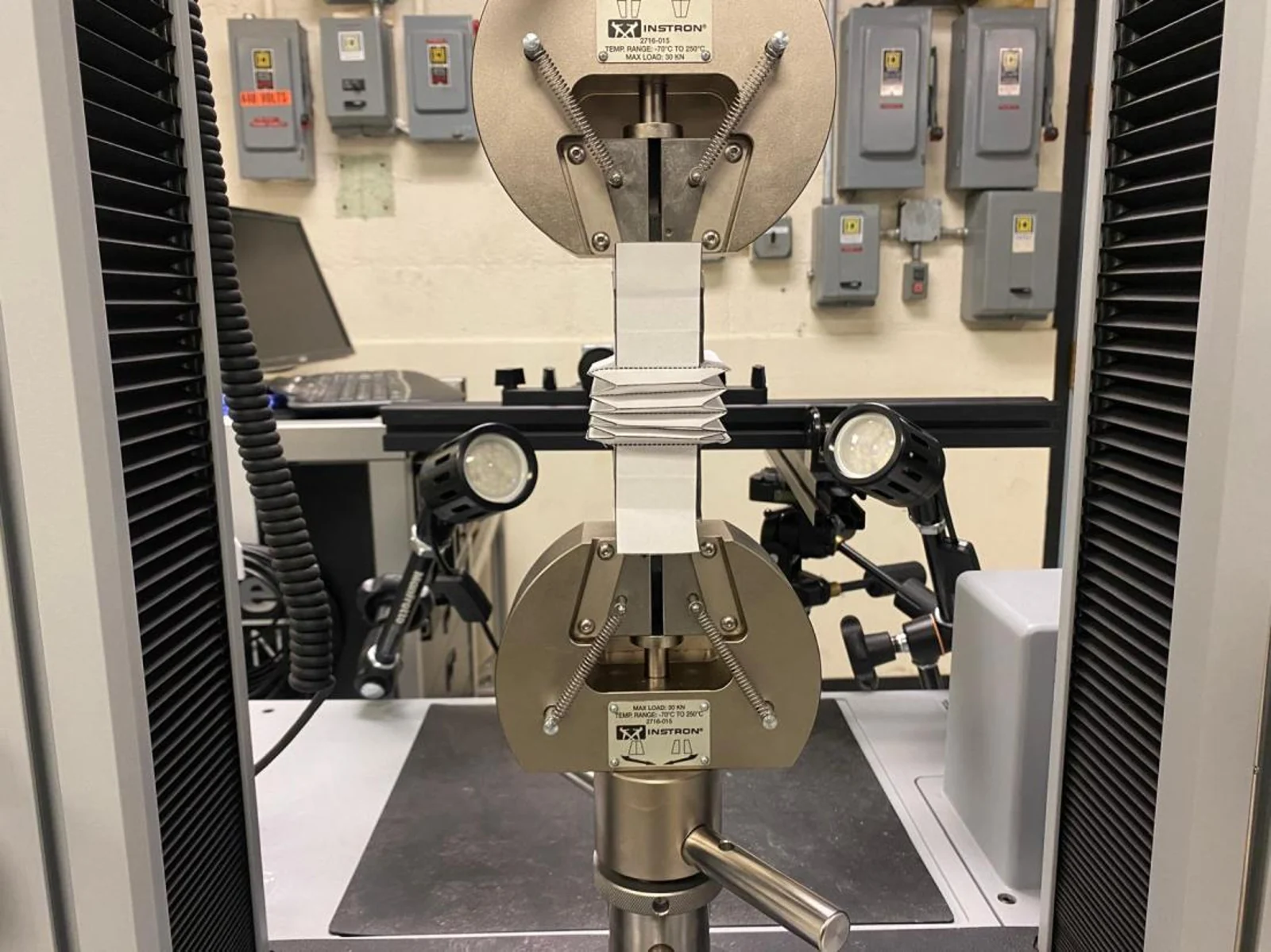
I drew the crease pattern in NX, then scored and folded the paper into a bellows. Printed fixtures connected its ends to the tensile frame. I carried out the CAD, fabrication, testing, and analysis, with fixture guidance from the Space Structures Lab.
Reading the force and the damage together
The trial recorded a peak of 48.1 N and tearing near an attachment. The record began with preload and covered limited movement, so it did not capture a complete opening cycle. I considered the measured force alongside where the paper tore, rather than treating the peak as an intrinsic property of the folding pattern.
The useful next step was to improve the attachments and repeat the test. Those changes were identified from the trial; they were not completed within this project.
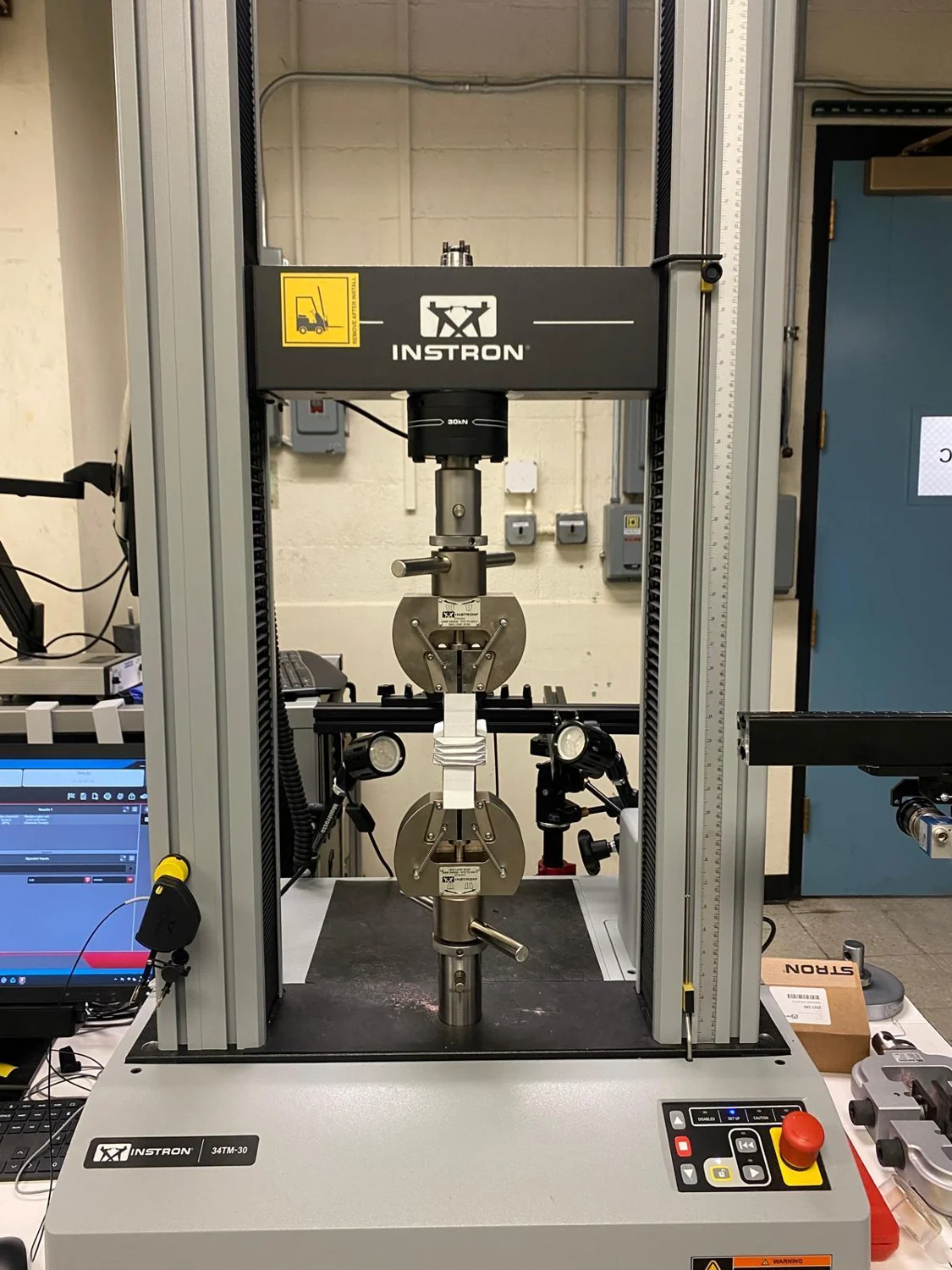
Printed fixtures connect the paper bellows to the test frame. Tearing occurred near an attachment.
Project report, PDF page 7.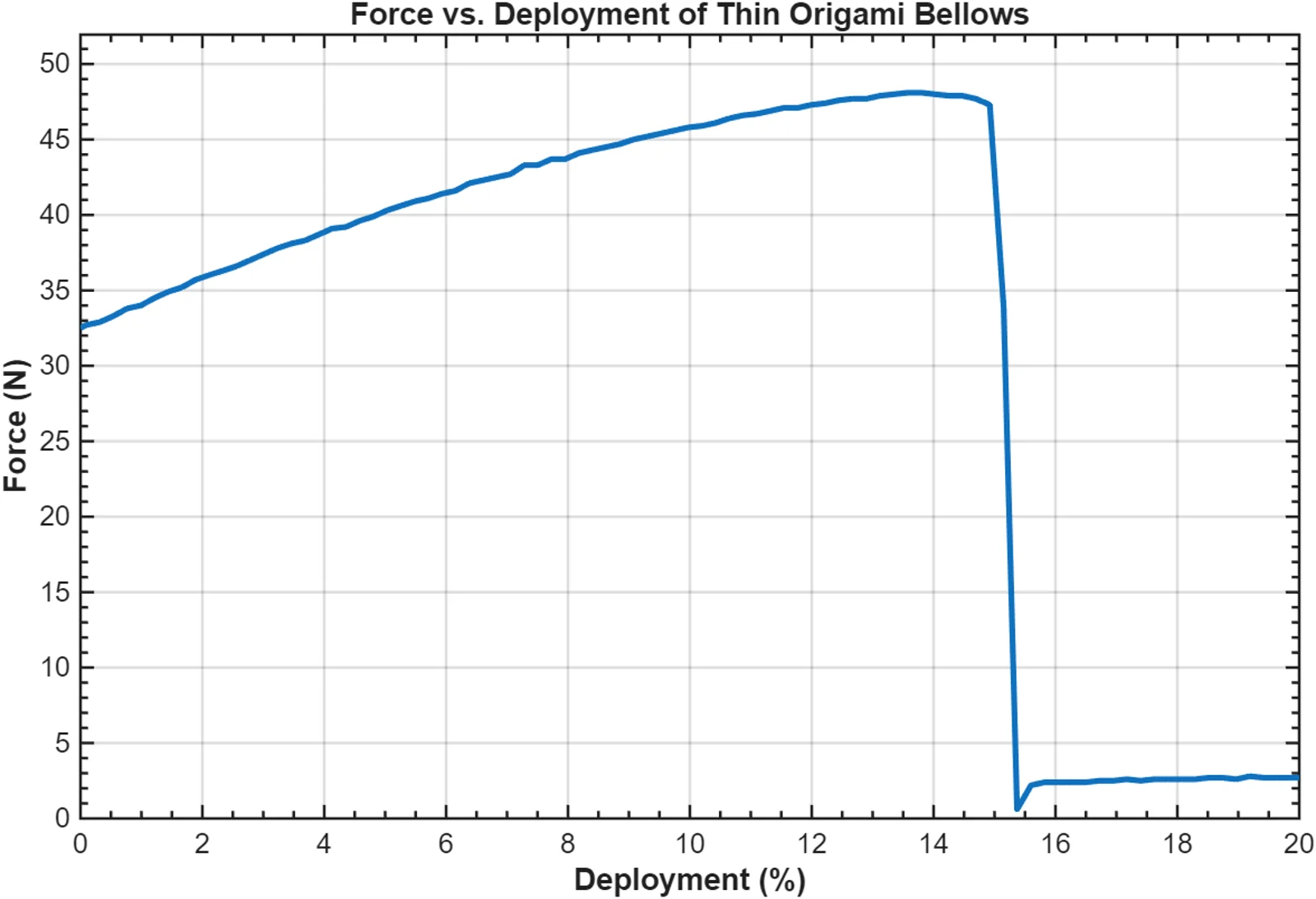
The recorded force peaks at 48.1 N. Preload and limited movement mean this is not a complete opening-cycle measurement.
Project report, PDF page 9.I performed CAD, fabrication, testing, and analysis. The report acknowledges fixture guidance from the Space Structures Lab.
Go deeper / Full technical report
Thin Origami Bellows
Open the original report for the methodology, calculations, and detailed results behind this overview.