Composite manufacturing / UIUC · AE 526 / 2026
Carbon-Epoxy I-Beam
I led the build of a composite beam and revised the manufacturing process when the first cure warped its flanges.
Overview
Building a beam from the team’s design.
Our team designed a carbon-fiber I-beam for a 7,200 lbf load target. I led fabrication, turning the numerical design into a physical beam using the materials, tooling, and cure equipment available to us.
We changed the core preparation when foam filling proved impractical, then revised the cure setup after the flanges warped. The team’s tested Nomex-core beam reached 2,376 lbf—about one-third of the target.
The test exposed a substantial gap between the design prediction and the manufactured beam. My part of the project was working through the build decisions and documenting the process behind that result.
Choosing a core we could manufacture
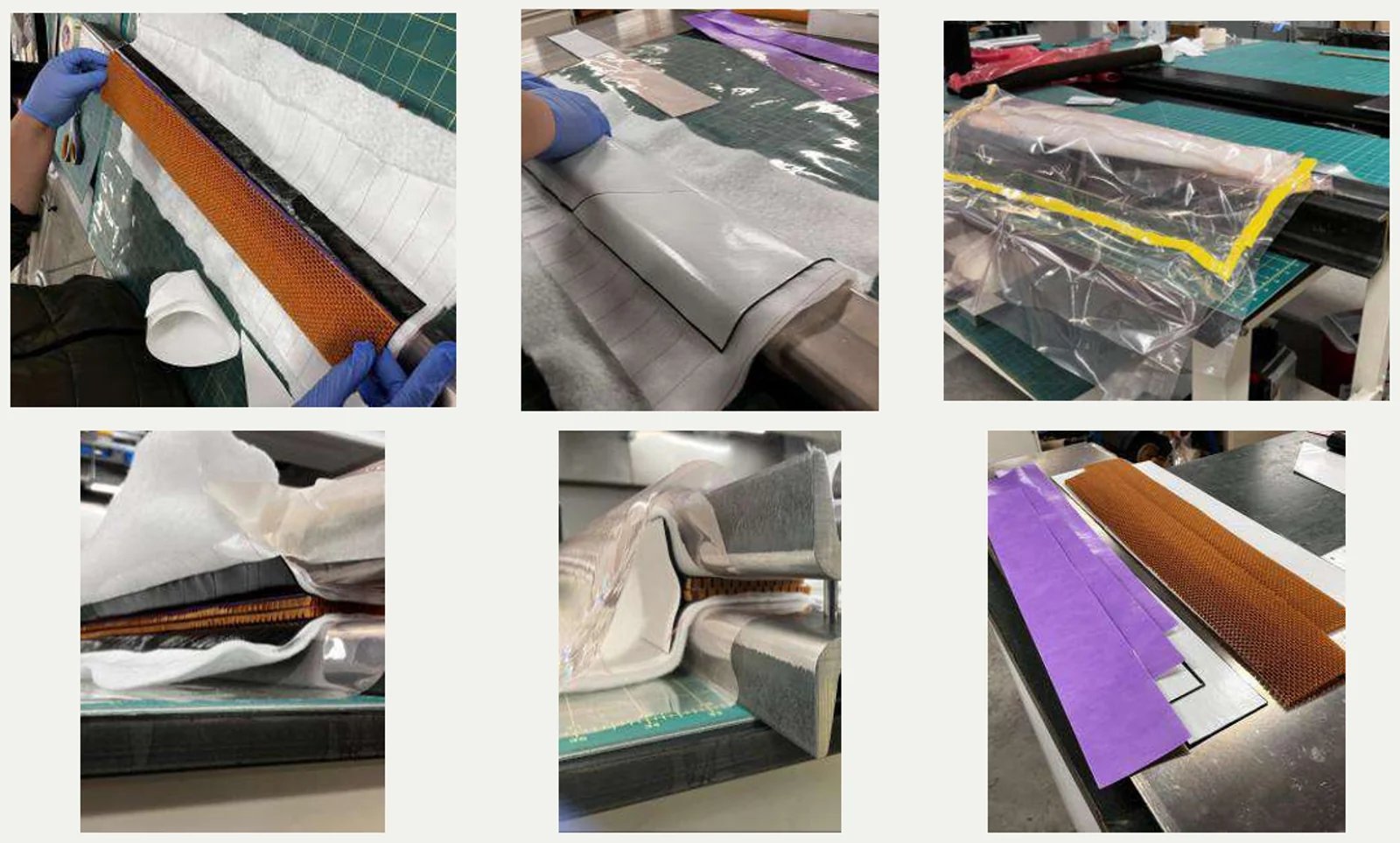
The initial plan used foam-filled Nomex honeycomb. Filling the core proved impractical, so we moved to unfilled Nomex bonded with adhesive film. I worked through the layup and assembly around the team’s design, available prepreg, and steel-channel tooling.
Changing the cure setup
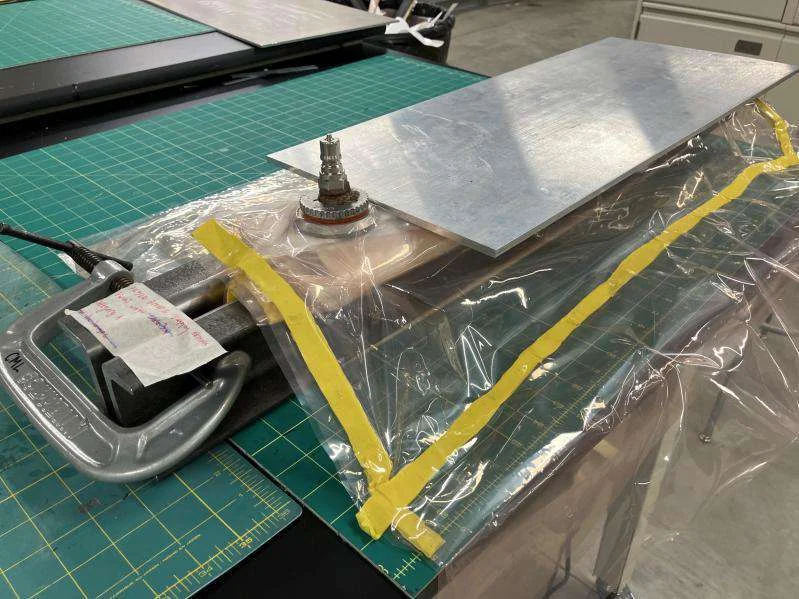
The initial cure left the flanges warped. We changed the beam’s orientation and added restraint during curing to address the distortion. This was a manufacturing problem we had to resolve before the beam could be tested.
What the load test showed
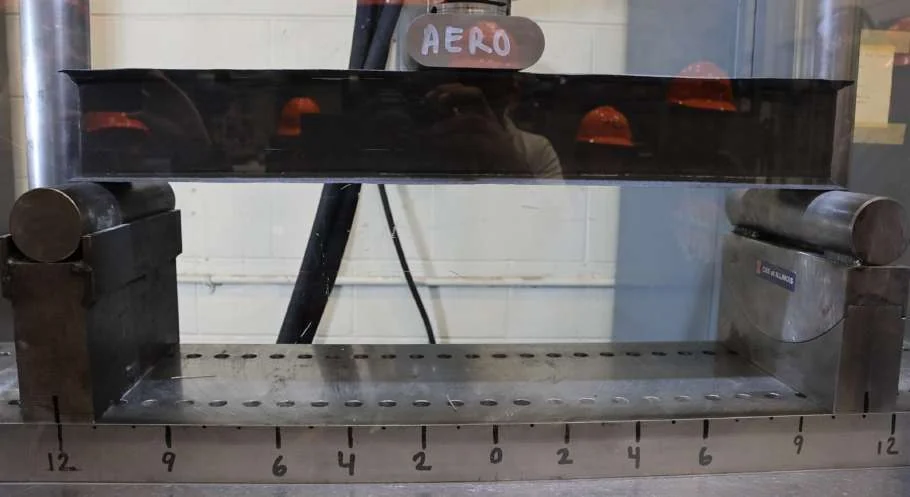
The team measured a failure load of 2,376 lbf against the 7,200 lbf target. The build did not achieve the required load, and the result made the difference between an ideal numerical structure and the manufactured part clear. The report records the fabrication sequence and test for further investigation.
Team project. I led fabrication; numerical design and aggregate test results are credited to the team.
Go deeper / Full technical report
Manufacturing and Testing a Carbon Fiber Reinforced Epoxy I Beam
Open the original report for the methodology, calculations, and detailed results behind this overview.