Mechanism design / UIUC · AE 498 / 2026
Thick Origami Mechanisms
I adapted paper-folding geometry into printed mechanisms, making room for the thickness of real panels.
Overview
Getting solid panels to fold.
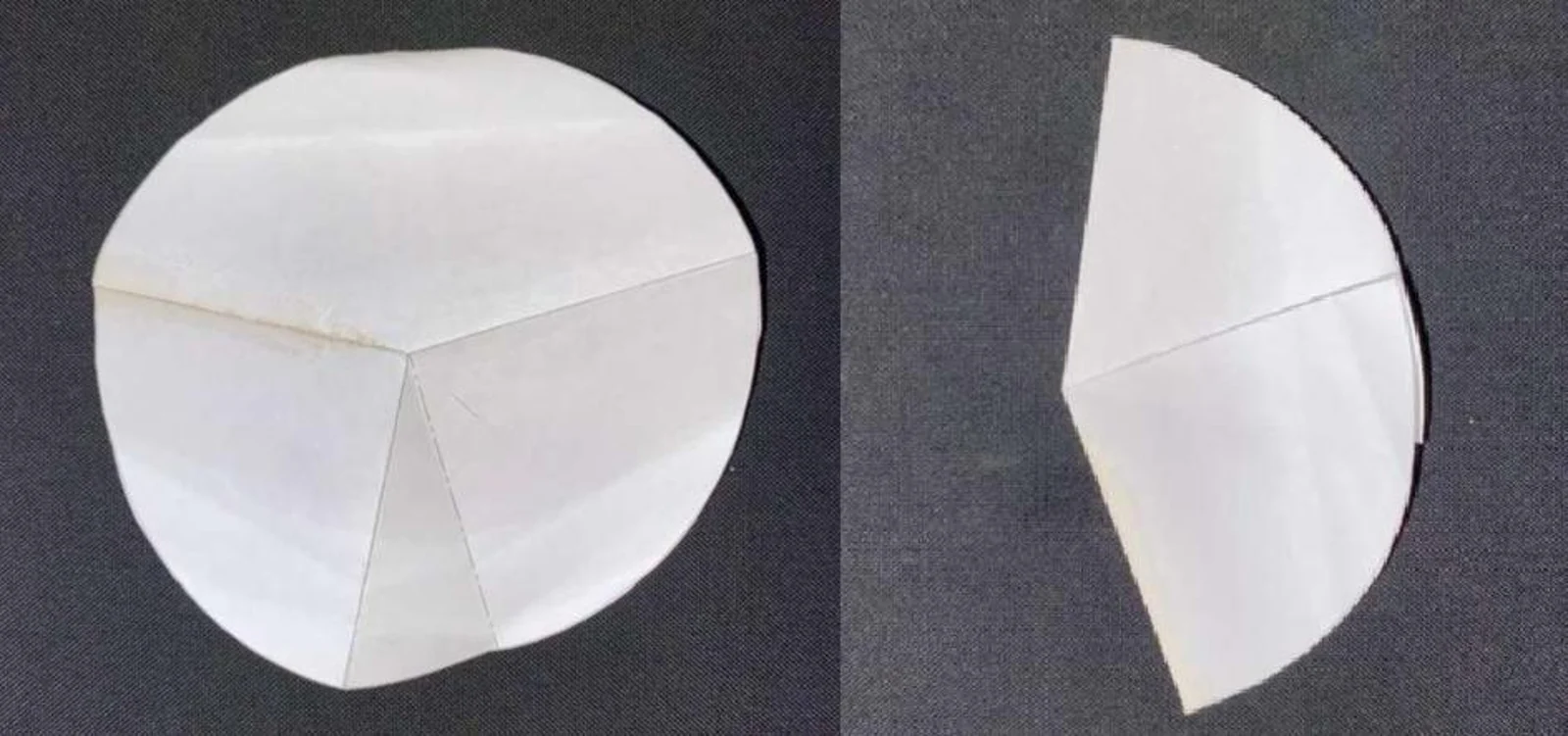
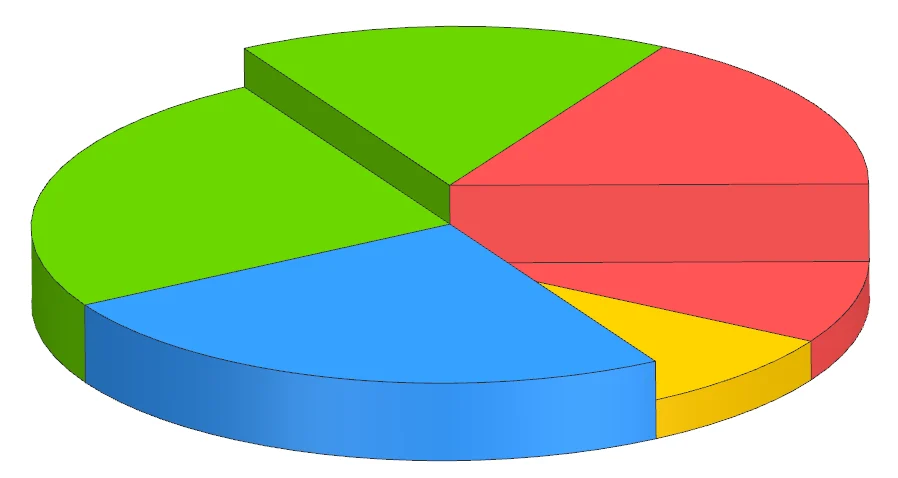
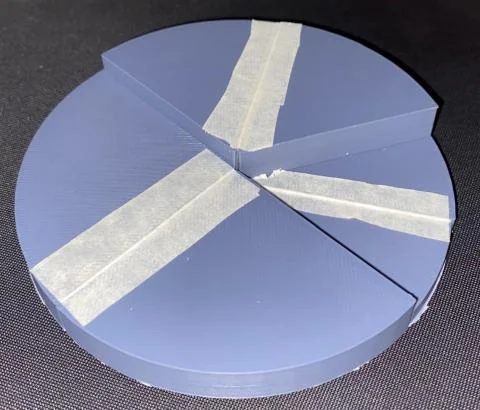
A pattern that folds in paper can jam when its panels have thickness. I designed rigid-panel mechanisms in NX, changing panel thicknesses and adding cutouts to give the moving parts room.
I prepared the designs, assembled the printed panels with tape hinges, and checked their motion by hand. Nikhil submitted the print job on the Space Structures Lab-managed printer.
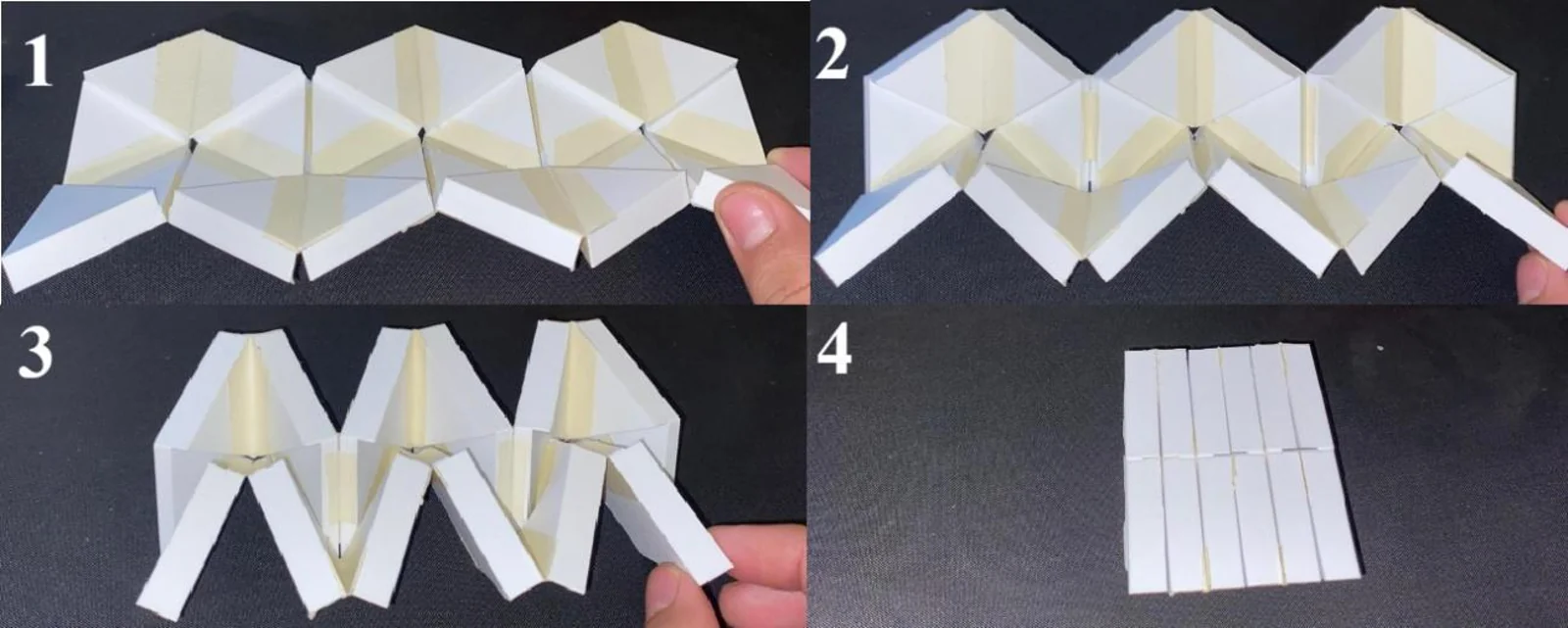
The Bennett-linkage prototype demonstrated coordinated folding, and a related Miura-Ori assembly explored another pattern. These were working demonstrations of the geometry; strength and repeated-use durability were not tested.
Allowing for panel thickness
The paper models helped establish the folding motion. In NX, I translated that geometry into solid parts. I varied panel thickness and cut away material where needed so neighboring panels could pass one another as the mechanism folded.
Assembling and checking the motion
I joined the printed panels with tape hinges and moved the Bennett-linkage prototype through its folding sequence. That physical check showed the coordinated movement of the assembled parts, beyond what the CAD views alone could show.

Trying a second folding pattern
I also assembled a thick-panel Miura-Ori model and examined its motion. Together, the prototypes showed how thickness and clearance affect whether a folding pattern can work as a physical mechanism.
I performed design, preparation, assembly, and evaluation. Nikhil submitted the print job on the Space Structures Lab-managed printer.
Go deeper / Full technical report
Thick Origami
Open the original report for the methodology, calculations, and detailed results behind this overview.