Flexible mechanisms / UIUC · AE 498 / 2026
Tape Spring Hinge
I tested a flexible steel hinge in several ways to find which parts of its behavior the model could predict.
Overview
Checking a hinge against a real specimen.
A tape spring can fold and recover using the flexibility of a thin curved strip. I prepared a steel specimen and compared its shape, vibration, and bending response with models in Abaqus and MATLAB.
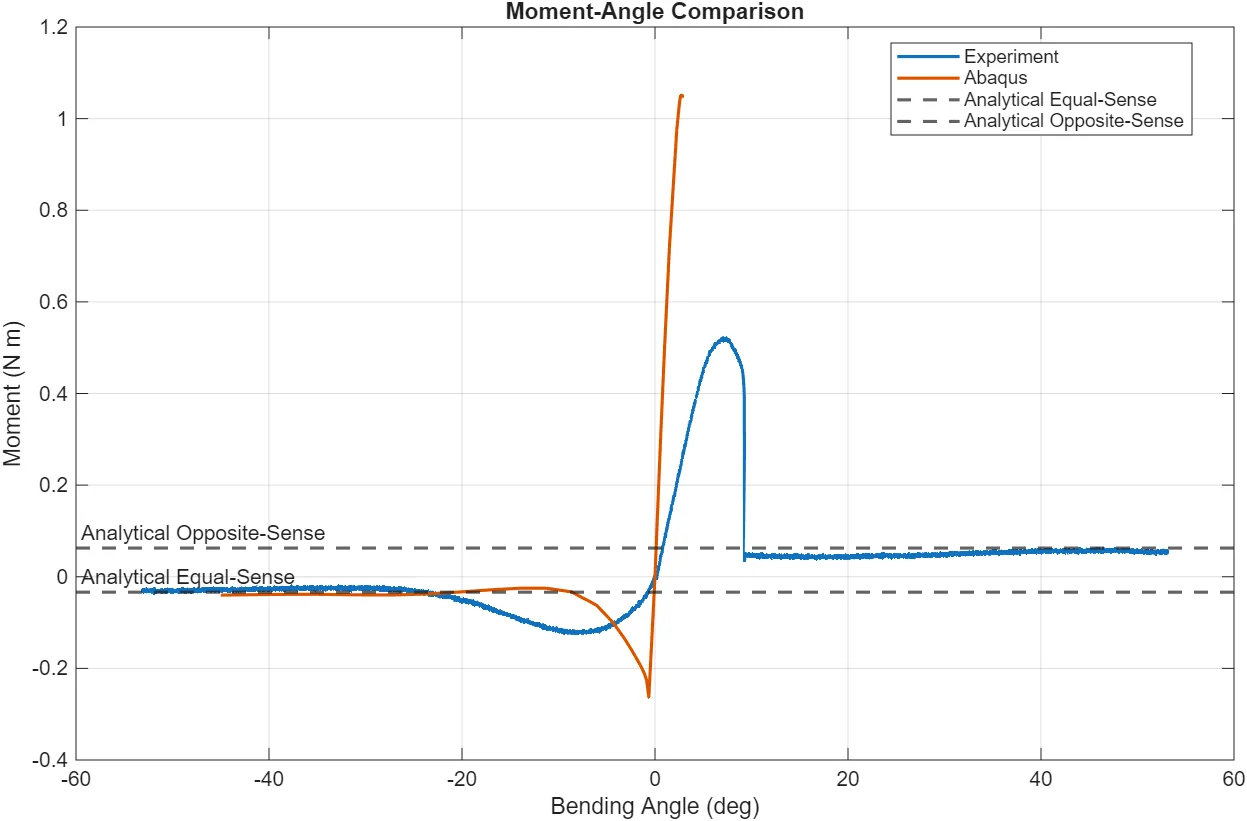
The second vibration frequency matched within about 5%, while other modes differed more. The nonlinear bending simulation also stopped before completing the measured response.
Checking several behaviors made the comparison more useful: a close result in one test could not establish that the model captured the hinge’s full motion. The project gave me measured evidence for where the assumptions needed further attention.
Measuring the hinge before comparing it
I prepared the thin steel specimen and used camera measurements to record its shape. I combined those measurements with a tap test for vibration and a separate bending test, so each comparison addressed a different part of the hinge’s behavior.
The motion sequence shows the specimen changing shape. The vibration measurements came from a separate tap test.
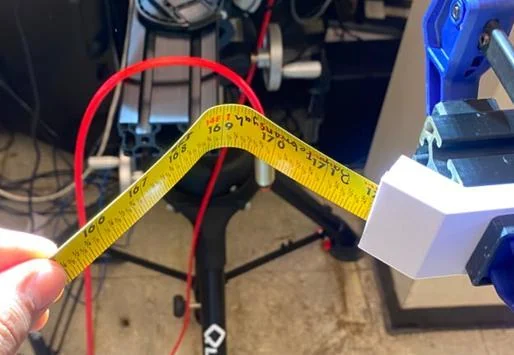
The tape spring bent between fixtures, with a ruler for scale.
Project report, PDF page 15.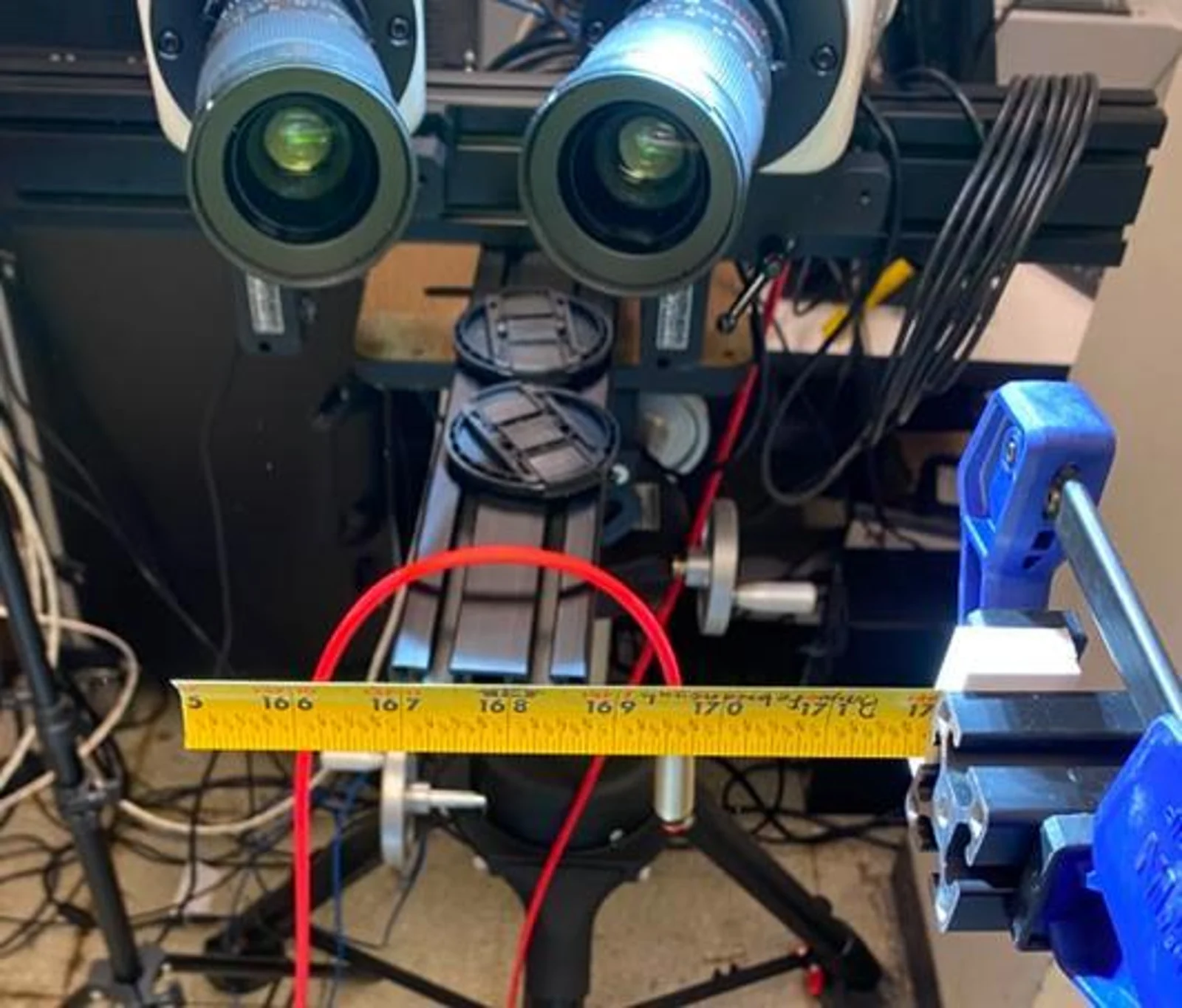
The cameras and specimen used for the tape-spring measurements.
Project report, PDF page 15.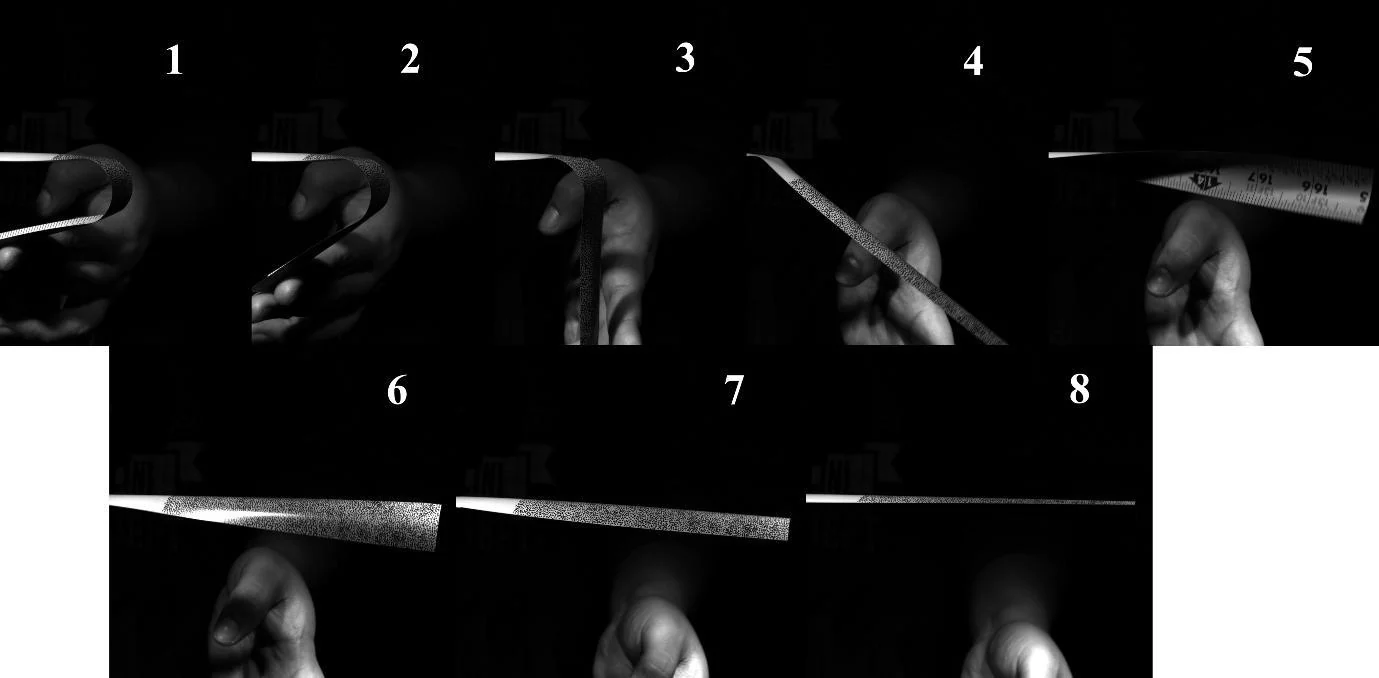
Frames from the motion sequence, separate from the vibration measurements.
Project report, PDF page 35.Where the predictions agreed
The second vibration mode measured 111.70 Hz, compared with a prediction of 117.20 Hz—a difference of about 5%. Other modes differed more. I analyzed the measurements in MATLAB alongside the Abaqus results rather than judging the model from its closest match alone.
Where the comparison remained incomplete
The nonlinear bending simulation stopped before reproducing the full measured response. The plot shows that limit directly. Completing that response and investigating the test and modeling assumptions remained further work.
Go deeper / Full technical report
Tape Spring Hinge
Open the original report for the methodology, calculations, and detailed results behind this overview.