Impact simulation / ITB · Undergraduate thesis / 2023
Functionally Graded Crash Boxes
My thesis compared crash-box designs and showed how redistributing wall thickness changes their response to impact.
Overview
Studying how a crash box absorbs impact.
A crash box absorbs energy by folding during an impact. In my undergraduate thesis, I studied how its internal walls and thickness distribution change that process.
I developed LS-DYNA models, checked the modeling approach against a published impact test, and compared designs under the same simulated conditions. One graded design absorbed 124% more energy per unit of crushed material than a plain tube, and 11.8% more than a conventional multicell tube.
The same design had a 15.8% lower mean crushing force than the multicell comparison. These simulation results showed a tradeoff to consider in design selection; the proposed structures were not physically tested.
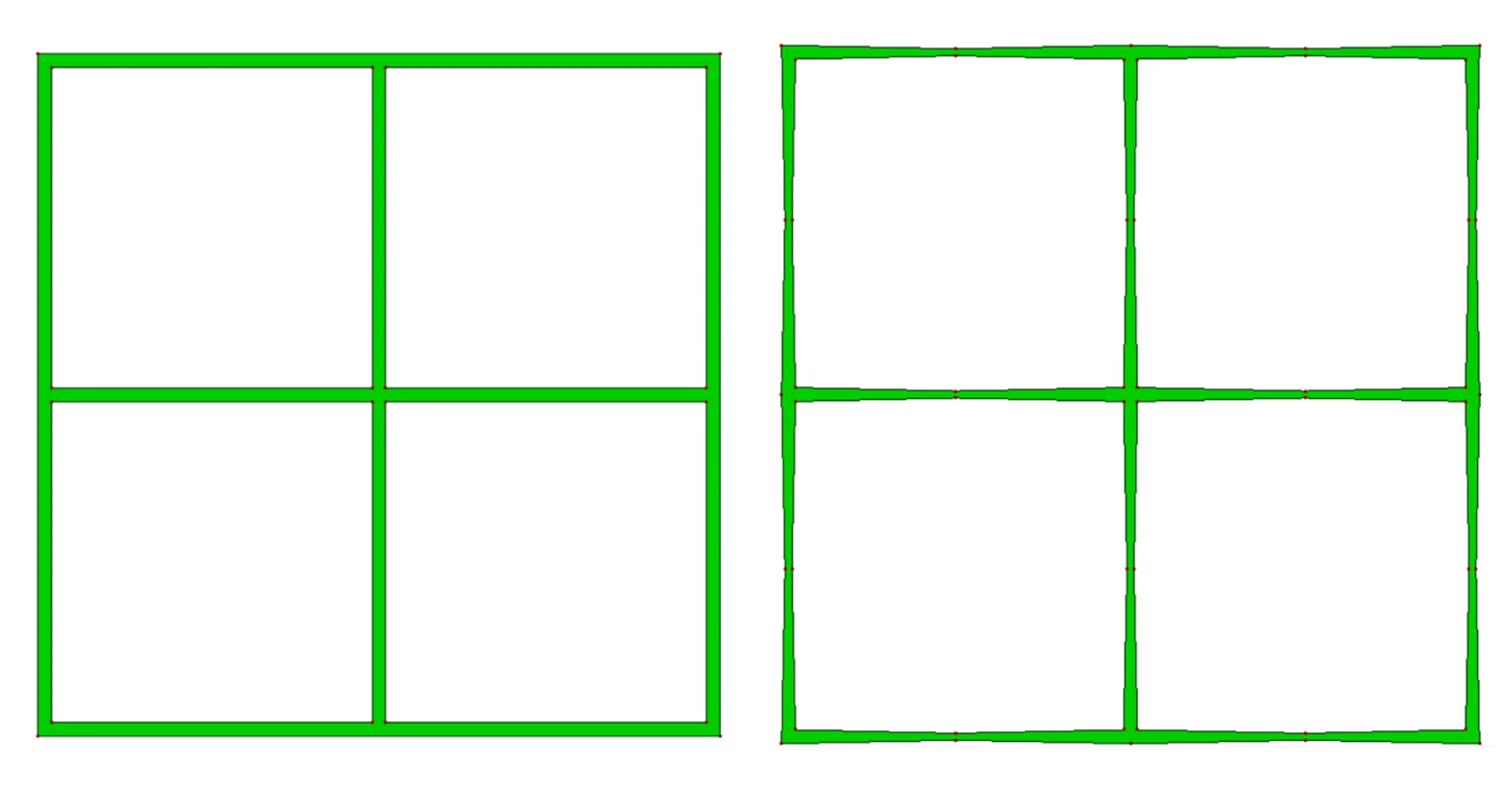
Comparing the wall layouts
I modeled plain, multicell, and graded-thickness tubes. Changing the wall thickness across a section let me study where the material influenced the folding sequence. Using common impact conditions made the numerical comparisons consistent.
Checking the model and following the collapse
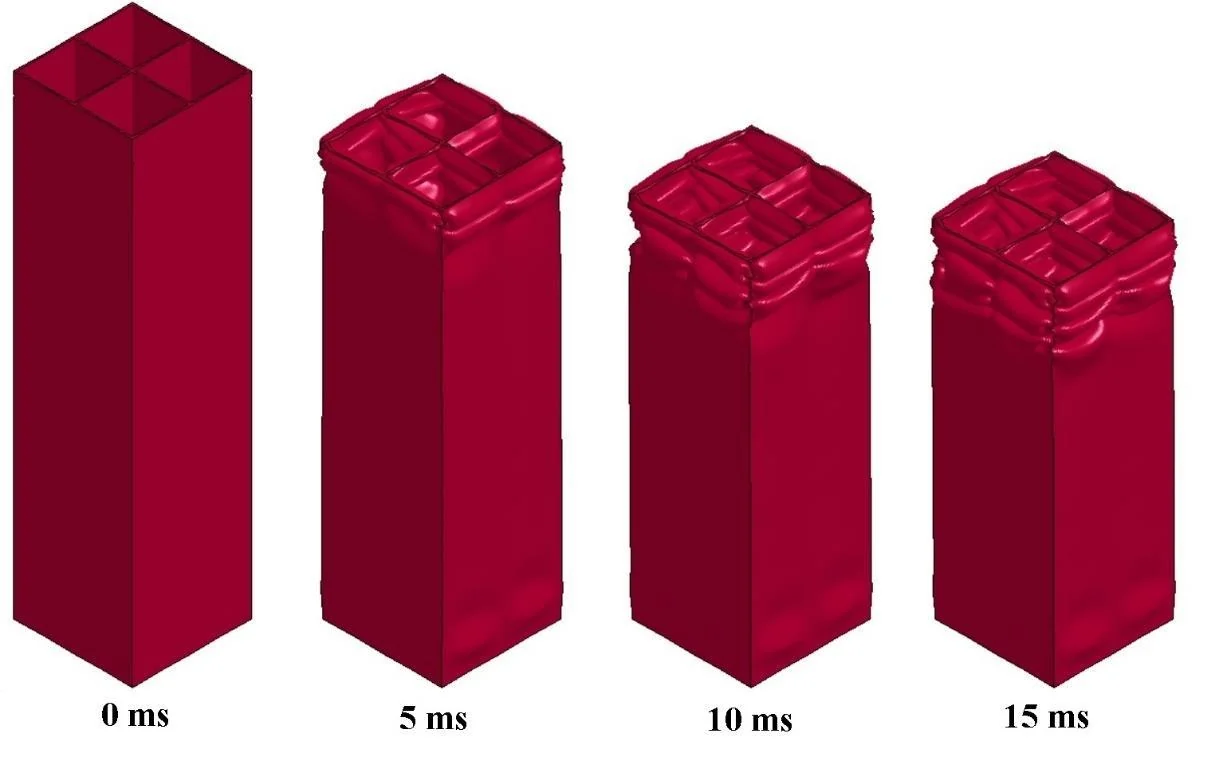
I used a physical impact test from published research as a benchmark for the modeling approach. That experiment was performed by the cited researchers; my work was the numerical modeling and design comparison.
I examined the progressive collapse alongside the energy and force results. The highlighted design improved energy absorption per crushed mass, but that measure uses the material crushed during the event, not the total component mass. Its lower mean crushing force also mattered to the comparison. Physical tests would be needed to assess the proposed designs further.
Go deeper / Full technical report
Impact Analysis of Multi-Cell Crash Box Structures with Transverse Functionally Graded Thickness
Open the original report for the methodology, calculations, and detailed results behind this overview.